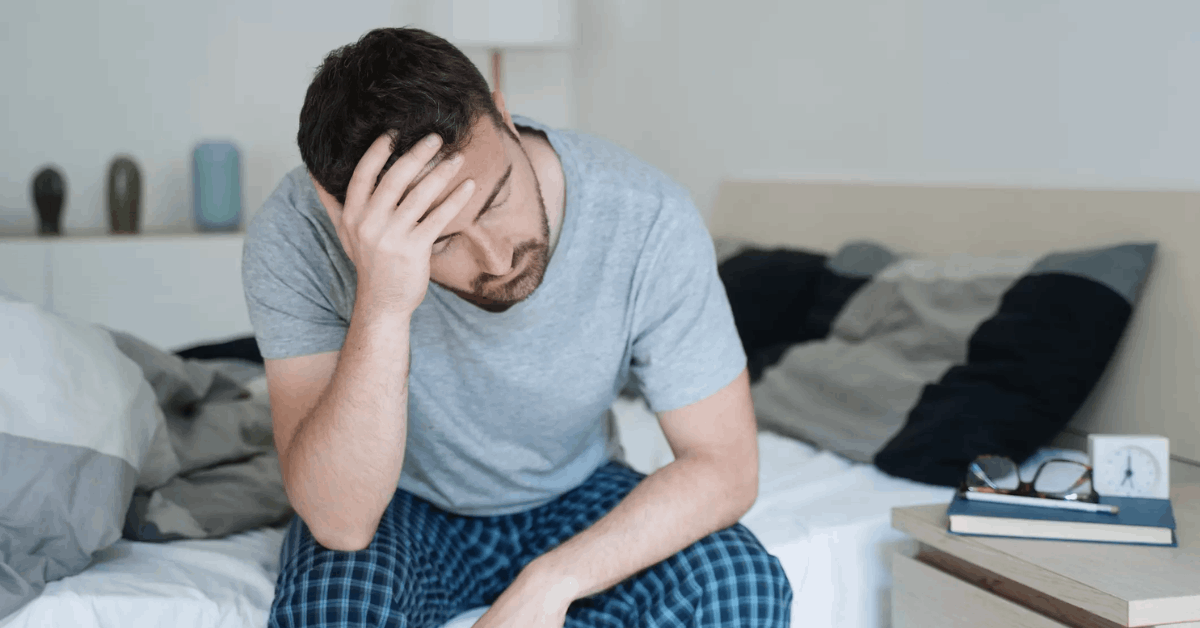
If you want to fall asleep fast, you need to calm your body first and then quiet your mind. Stress makes it harder to fall asleep fast because it keeps your nervous system alert even when you feel tired.
The goal is not to force sleep, because pressure and frustration usually delay it. A better plan lowers arousal, limits stimulation, and gives your brain a repeatable path into rest. These steps are realistic for busy days and stressful weeks.
The Three Most Common Stress Sleep Problems
Stress-related sleep trouble usually follows a pattern, and the fix depends on the pattern you are stuck in.

When stress is high, your body may stay in alert mode, your mind may keep scanning for problems, or your muscles may stay tense.
Each of those states blocks smooth sleep onset, even if you are exhausted. The good news is that these patterns respond to targeted routines that reduce arousal and rebuild predictability. Start by identifying what you feel most at bedtime.

You Feel Tired But Cannot Switch Off
This is the wired-but-tired pattern where sleepiness is present, but the brain stays active. You might feel drowsy and still notice quick breathing, tight shoulders, or a restless urge to move.
The common mistake is staying in bed and wrestling with your thoughts, which teaches your brain that bed equals effort.
The better move is to use a short downshift routine that you repeat nightly, even on good days. Consistency turns the routine into a cue that sleep is coming.
Your Mind Replays Conversations And Worries
When your mind replays what happened today or rehearses tomorrow, it is trying to solve uncertainty. That problem-solving mode feels productive, but it keeps your attention sharp and your body activated.
When you treat each thought as urgent, your attention stays sharp, and your body stays activated. The fix is not to win the argument; it is to change your relationship with the thoughts so they lose urgency.
Your Body Feels Physically Wired
Some people feel mentally calm and still feel physically keyed up, like their body cannot settle. Your muscles may stay tense, your heart rate may feel elevated, or you may notice shallow breathing even in a quiet room.
This can happen after late work, heavy news, late-night exercise, or unresolved stress that your body is holding.
In this case, body-first strategies work best because physical calm often unlocks mental calm. The goal is to lower tension and signal safety through sensation.
Daytime Moves That Make Sleep Easier At Night
Falling asleep faster at night starts with what you do during the day, especially when stress is high.
Your body builds sleep pressure as the day goes on, and your brain clock responds to light and routines. If your day is irregular, your night often feels irregular as well, making stress-based insomnia more likely.
Your daytime choices shape sleep pressure and circadian timing, which in turn determine how ready your brain is for sleep. These daytime moves help sleep arrive with less effort later.
Morning Light And Movement Build Sleep Readiness
Morning light is a strong signal that helps your brain set a stable sleep and wake rhythm. A short outdoor walk, even on busy days, supports alertness earlier and sleepiness later.
Movement also reduces physical tension and improves mood, which can lower bedtime arousal.
You do not need intense workouts to benefit, because consistency matters more than intensity. If stress is your main trigger, this simple morning routine can make evenings feel less reactive.
Caffeine, Alcohol, And Timing That Protects Sleep
Caffeine is a common reason stressed people cannot fall asleep quickly, because it blocks the buildup of sleep pressure. If your sleep is fragile, move your last caffeine earlier and keep it consistent across weekdays and weekends.
Alcohol can feel calming at first, but it often disrupts the second half of the night and increases awakenings.
Late heavy meals can also keep your body active when you want it powering down. The goal is predictable timing that reduces hidden sleep disruption and gives your body a cleaner path into sleep.
The Evening Routine That Reduces Stress Load
Evening is when stress often catches up, because your brain finally has space to think.

Without a routine, bedtime becomes the place where you process everything, and that delays sleep. A good routine creates a clear boundary between problem-solving and recovery, even when your day was chaotic.
It also reduces stimulation, so your nervous system has time to downshift. Keep it simple enough that you can do it on your worst days.
A Two-Stage Wind Down You Can Repeat
A strong wind-down is structured, not random. Two-stage wind down means you shut down first by writing tomorrow’s top three tasks, one worry, and one next step you can take later, then you stop.
Next, you decompress with low-stimulation activity like a warm shower, light reading, or calm music at a consistent time.
The key is doing it in the same order most nights, so your brain learns the sequence. Over time, this reduces the feeling that you must solve life before you can sleep.
Screens, Light, And Late Work Boundaries
Late work and screens keep your brain in performance mode, which fights the sleep switch you are trying to flip. Bright light at night signals alertness, so dimming your space and lowering screen intensity helps your body move toward sleep.
A practical boundary is choosing a hard stop time for email and intense tasks, then switching to your wind-down sequence.
Notifications also matter because they create micro-stimulation that pulls attention back to stress. You need a protected window where your brain is not on call, and that is where sleep starts to win again.
What To Do In The Last Ten Minutes Before Sleep
The final minutes before sleep should be boring, predictable, and free of decision-making.

This is not the time to check messages, chase sleep data, or think through problems again.
If stress is your trigger, the goal is to lower cognitive load and reduce body arousal at the same time.
A short sequence works better than a long one because you are tired and your brain wants simplicity. Use the same sequence every night, so it becomes automatic.
Breath And Muscle Release Sequence
Start with slow breathing where your exhale is slightly longer than your inhale, keeping the pace comfortable. Then do a quick muscle release scan, relaxing jaw, shoulders, hands, and legs in that order.
If thoughts show up, label them as thoughts and return to breath without debating the content.
This lowers physiological activation and shifts attention away from worry loops. With practice, this sequence becomes a reliable bridge from alertness to drowsiness.
What To Do If Sleep Does Not Arrive Quickly
If you are wide awake after a reasonable stretch, do not escalate pressure by forcing it. Staying in bed, frustrated, can train your brain to associate bed with effort and alertness.
Instead, keep lights low and do a quiet, boring activity outside bed, like reading a calm page or listening to gentle audio.
Avoid clock watching because it triggers performance thinking and stress spikes. Return to bed only when you feel sleepy again, because you are rebuilding bed as a cue for sleep.
Apps That Help You Fall Asleep When Stressed
Apps are not a cure for insomnia, but they can reduce friction when stress makes bedtime difficult.
The best apps support relaxation, cognitive offloading, or steady sound environments that lower arousal.
Treat these tools as routine support, not as a test, because chasing perfect sleep numbers can increase anxiety. Pick one or two apps and use them consistently for two weeks before judging results. Below are four options not used earlier in this thread.
CBT-i Coach For Structured Sleep Skills
CBT-i Coach is designed to support cognitive-behavioral strategies for insomnia treatment. It can help you track sleep patterns, reinforce consistent routines, and practice skills that reduce sleep anxiety.
This is useful when stress turns bedtime into a performance test, because structure lowers uncertainty.
The best use is pairing it with a simple schedule and a steady wind-down routine, then reviewing trends rather than single nights. If your stress is persistent, this type of tool can keep your plan organized and realistic.
Headspace For Guided Downshift Sessions
Headspace offers guided sessions that help you reduce mental noise when your mind is busy. It can be helpful for stress-based rumination because the audio provides a simple track to follow.
The value is repeatability, using the same short session as your nightly cue instead of scrolling or problem-solving.
Many people benefit from a consistent pre-sleep session that becomes familiar and safe. Use it at the same point in your routine each night so your body learns the pattern.
Pzizz For Sleep-Focused Soundscapes
Pzizz is built around audio designed to help you fall asleep faster through soundscapes and voice elements. This can help when stress makes silence feel loud or when your mind keeps pulling you back into worry.
The best approach is to keep volume moderate and choose a consistent track style that feels calming.
Over time, familiar audio can create a stable, low-effort environment for drowsiness and shorten the transition into sleep. It is not about distraction; it is about making sleep feel easier to enter.
Sleep Cycle For Smarter Wake Timing And Night Support
Sleep Cycle focuses on sleep tracking and waking you at a lighter point in your sleep window, which can reduce morning grogginess.
While it is not a direct stress treatment, it can help you see how stress and habits affect your sleep patterns.
The value is using trends to adjust routine, such as shifting caffeine, changing bedtime timing, or improving your wind-down consistency. Use it lightly so you do not become anxious about data and turn sleep into another performance test.
Conclusion
If you want to fall asleep fast when you are stressed, focus on lowering arousal and rebuilding predictability. Anchor your day with morning light and movement, then protect your evening with simple boundaries around caffeine, screens, and late work.
In the last minutes, rely on breathing and muscle release instead of thinking your way to sleep. Apps can support routine, but repeatable habits create the biggest change over time.